

As Australian businesses race toward digital transformation, one challenge consistently stands in their way: outdated legacy systems. These old platforms—often built decades ago—slow down operations, block innovation, and make integration with modern tools nearly impossible. In an era where cloud technology is now the backbone of digital growth, modernising legacy systems through cloud application development has become essential rather than optional.
Whether you’re running an established enterprise or scaling a fast-growing company, migrating to the cloud offers unmatched agility, security, and long-term sustainability. Here’s a comprehensive guide on how Australian businesses can successfully modernise legacy systems using cloud development.
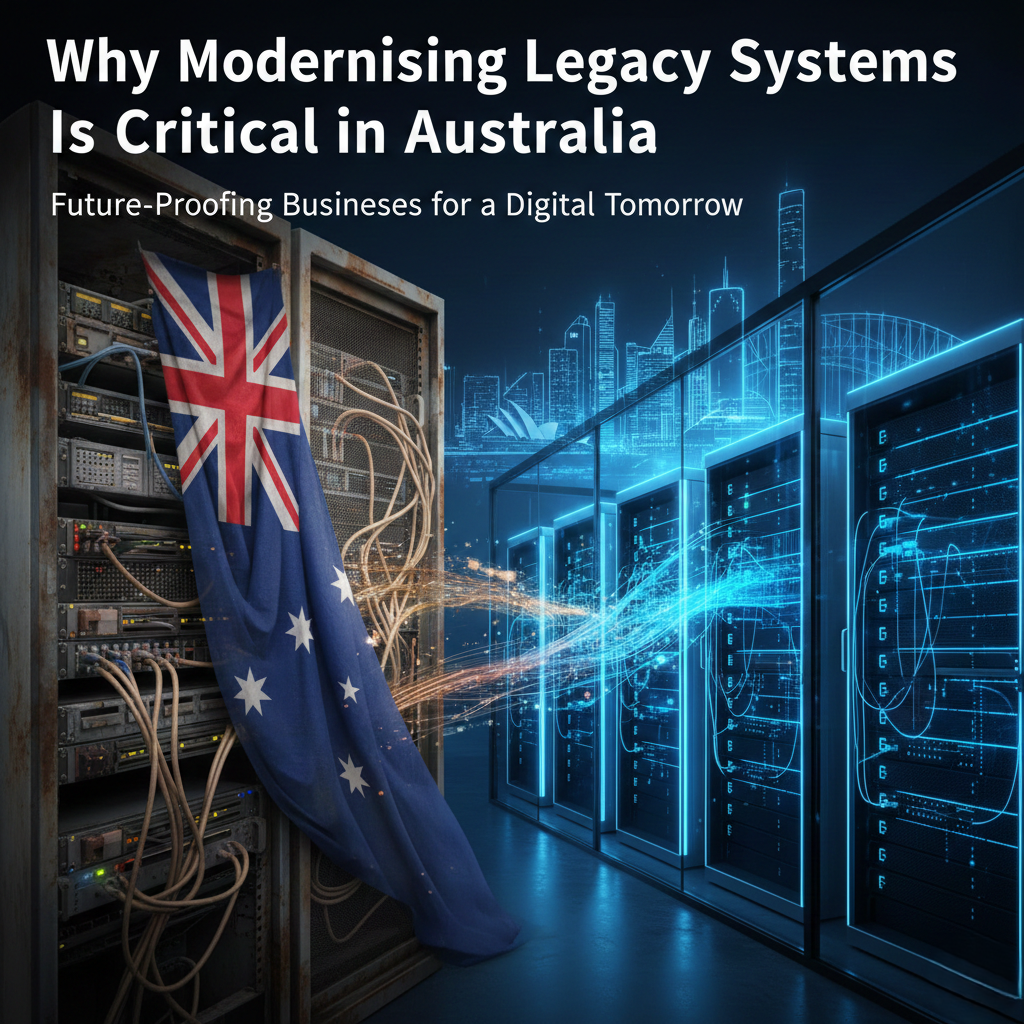
Why Modernising Legacy Systems Is Critical in Australia
1. Rising Operational Costs
Legacy systems are expensive to maintain—requiring outdated hardware, specialised technicians, and frequent manual updates. Cloud platforms eliminate these recurring expenses with a scalable, pay-as-you-go model.
2. Limited Innovation
Older software simply can’t support new technologies such as AI, automation, real-time analytics, and advanced APIs. Cloud-based systems unlock these capabilities instantly, empowering modern business operations.
3. Increasing Cybersecurity Risks
Legacy infrastructure is highly vulnerable to breaches. Meanwhile, major cloud providers like AWS, Azure, and Google Cloud offer world-class security compliance built directly into their environments.
4. Customer Expectations are Higher Than Ever
Today’s customers expect fast, seamless digital experiences. Cloud-based applications allow businesses to deliver better performance, higher availability, and personalised user experiences.
Key Benefits of Cloud Application Development for Legacy Modernisation
☁️ Scalability On Demand
Cloud systems scale automatically with business growth—whether during peak sales season or unexpected surges.
☁️ Reduced Time to Market
Modern cloud development uses CI/CD pipelines, automation, and microservices, significantly reducing development and deployment time.
☁️ Improved Integration Capabilities
Cloud-native apps integrate easily with CRMs, ERPs, marketing platforms, accounting software, and third-party APIs.
☁️ Stronger Reliability & Uptime
Cloud platforms offer 99.9%+ uptime, meaning fewer service interruptions and better performance.
☁️ Enhanced Data Management & Analytics
Cloud systems centralise your data and provide access to real-time insights, AI-based predictions, and advanced reporting.
How Australian Businesses Can Modernise Their Legacy Systems Successfully
Modernisation isn’t just about migrating data—it requires a strategic plan. Here’s a step-by-step approach that works reliably for Australian companies:
1. Conduct a Full System Assessment
Before migrating, evaluate:
- System dependencies
- Business processes
- Technology gaps
- Cost of maintaining current systems vs. modernising
This helps determine whether you need simple migration, partial rebuilding, or a full redesign.
2. Choose the Right Cloud Model
Australian businesses typically choose from:
- Public Cloud (AWS, Azure, Google Cloud): Ideal for cost efficiency and scalability
- Private Cloud: Best for industries needing strict compliance
- Hybrid Cloud: Combines both for flexibility
Select what aligns with your industry, growth, and security needs.
3. Break Down Monolithic Systems into Microservices
Legacy systems are usually “monoliths”—large and tightly coupled.
Cloud environments work best with microservices, where each component works independently.
Benefits include:
- Faster updates
- Independent scaling
- Better fault isolation
- Easier integration
4. Implement Containerisation & DevOps Practices
Tools like Docker, Kubernetes, Jenkins, and GitLab streamline modernisation through automation and containerisation.
This results in:
- Faster deployments
- Lower infrastructure cost
- Consistent environments across development and production
5. Plan for Data Migration and Security
Migrating data from legacy systems requires careful handling:
- Clean and validate your data
- Encrypt sensitive information
- Ensure compliance with Australian standards (ISO 27001, APRA, OAIC)
6. Test, Optimise & Deploy
Use cloud-native testing tools for:
- Load testing
- Security testing
- API testing
- Performance benchmarking
Once optimised, deploy gradually using blue-green or canary deployment strategies.
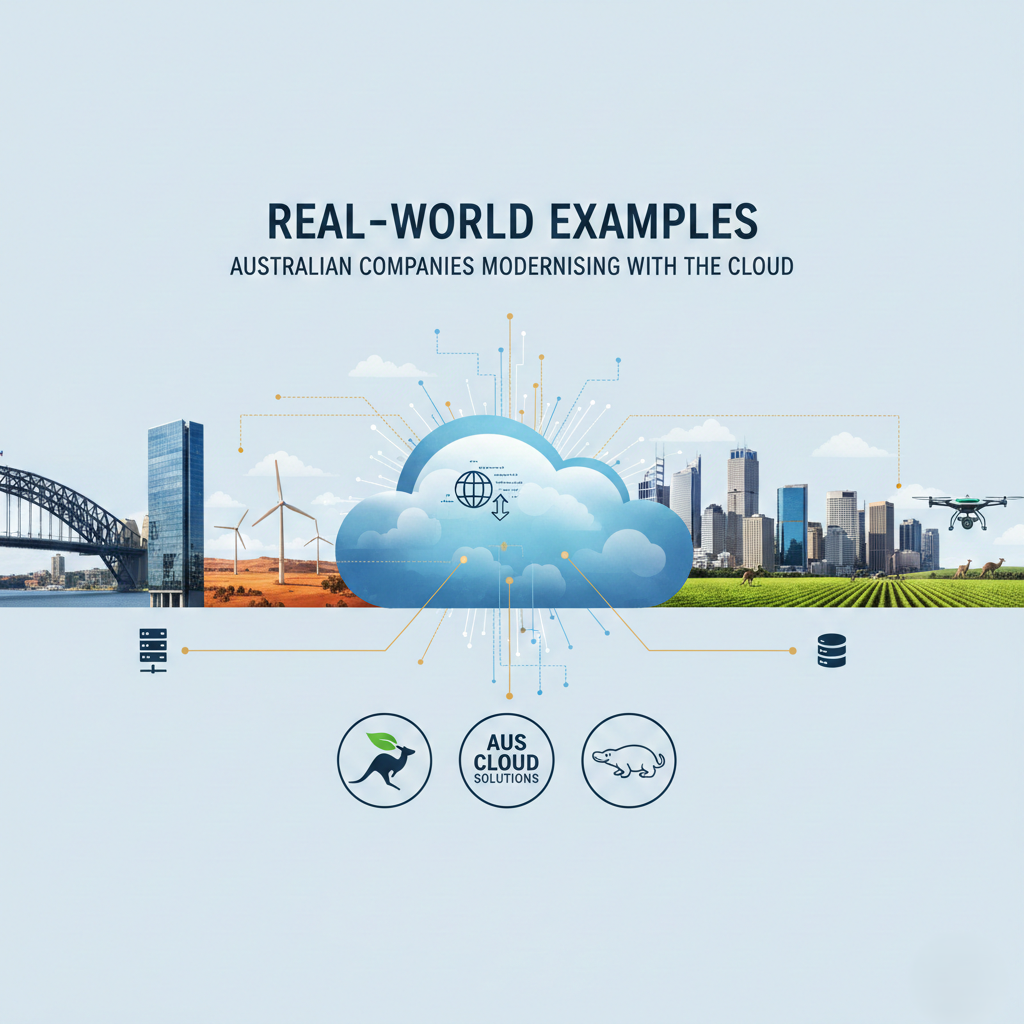
Real-World Examples: Australian Companies Modernising with the Cloud
🛒 Retail & Ecommerce
Retailers modernise to support:
- High-traffic online shopping
- Inventory automation
- Omnichannel integrations
🏥 Healthcare & Dental
Clinics and hospitals migrate to cloud apps for:
- Secure patient management
- Faster appointment scheduling
- AI-powered insights
🏢 Corporate Enterprises
Large organisations modernise systems to integrate:
- HR solutions
- Payroll systems
- CRM and ERP tools
Key Challenges to Avoid During Modernisation
- Rushing migration without proper planning
- Underestimating data migration complexity
- Not training employees on the new system
- Choosing the wrong cloud provider for your needs
With an experienced cloud development partner, these issues can be avoided.
Final Thoughts: The Cloud Is the Future of Australian Business
Modernising legacy systems through cloud application development is no longer a luxury—it’s a competitive necessity. Australian businesses that make the transition now gain a powerful edge through:
- Higher efficiency
- Better security
- Faster innovation
- Long-term cost savings
- Scalable architecture
By taking a structured approach and choosing the right cloud technology, companies can future-proof their operations and unlock the full potential of digital transformation.

