

The Australian ecommerce market is growing rapidly, but success isn’t guaranteed—especially for businesses selling niche products or specialty items. Unlike mass-market ecommerce stores, niche online stores target specific audiences with unique needs, preferences, and buying behaviours.
To grow sales and stand out in a competitive digital environment, niche ecommerce businesses in Australia must adopt focused, smart, and cost-effective marketing strategies that connect deeply with the right customers.
In this blog, we’ll explore proven ecommerce marketing strategies tailored specifically for niche products and specialty online stores in Australia.
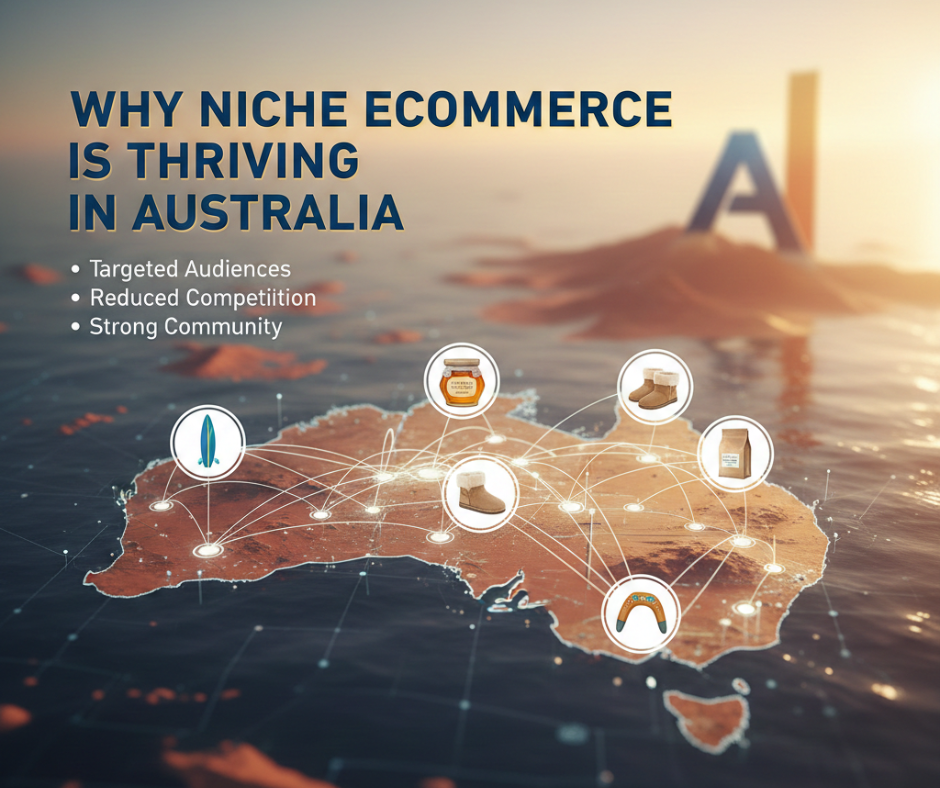
Why Niche Ecommerce Is Thriving in Australia
Australian consumers increasingly prefer specialised products over generic options. Whether it’s eco-friendly goods, handmade items, specialty electronics, health products, or locally sourced brands, niche ecommerce stores benefit from:
- Strong customer loyalty
- Higher profit margins
- Less direct competition
- More targeted marketing opportunities
However, niche markets require precision marketing—reaching fewer people, but the right people.
1. Understand Your Niche Audience Deeply
Success starts with understanding who your ideal customer is and why they buy from you.
Key questions to answer:
- What problem does your product solve?
- What motivates your customers to buy?
- Where do they spend time online?
- What keywords do they search for?
For Australian niche stores, local preferences, cultural behaviour, and regional trends play a big role in buying decisions.
2. Leverage SEO with Long-Tail & Niche Keywords
Search Engine Optimisation (SEO) is one of the most powerful tools for niche ecommerce.
Instead of targeting broad keywords like “buy shoes online”, niche stores should focus on long-tail keywords, such as:
- “handmade leather shoes Australia”
- “eco-friendly kitchen products Sydney”
- “specialty gaming accessories Australia”
Benefits of niche SEO:
- Lower competition
- Higher intent traffic
- Better conversion rates
Optimise:
- Product pages
- Category pages
- Blog content
- Meta titles and descriptions
3. Build Authority with Content Marketing
Content marketing helps niche ecommerce brands establish trust and credibility.
Effective content ideas include:
- Buying guides
- Product comparison blogs
- How-to articles
- Educational videos
- Customer success stories
- Industry insights
For example, a specialty health product store can publish blogs explaining product benefits, usage tips, and research-backed information—positioning itself as an expert in the niche.
4. Use Social Media to Build a Community (Not Just Sales)
Niche products thrive on community engagement rather than aggressive selling.
Best platforms for niche ecommerce in Australia:
- Instagram & TikTok – Visual products, lifestyle content
- Facebook Groups – Community discussions
- YouTube – Tutorials, reviews, demos
- Pinterest – Design, DIY, fashion, wellness niches
Strategies that work:
- User-generated content
- Behind-the-scenes posts
- Educational reels and short videos
- Customer testimonials
- Polls and Q&A sessions
Building a loyal audience creates repeat buyers and organic growth.

5. Partner with Micro-Influencers
Micro-influencers (5k–50k followers) are extremely effective for niche ecommerce brands.
Why?
- They have higher engagement rates
- Their followers trust them
- They focus on specific niches
- They are more affordable
Australian micro-influencers help niche stores reach highly relevant audiences without spending heavily on ads.
6. Run Highly Targeted Paid Ads
Paid advertising works best for niche ecommerce when campaigns are highly targeted.
Effective ad strategies include:
- Facebook & Instagram interest-based targeting
- Google Search Ads for long-tail keywords
- Retargeting ads for website visitors
- Lookalike audiences based on past buyers
Instead of spending broadly, niche stores should focus on quality traffic over quantity.
7. Highlight What Makes Your Store Unique
Your niche advantage is your biggest strength.
Make sure your website clearly communicates:
- What makes your product special
- Why customers should choose you
- Your brand story
- Ethical, local, or sustainable values (if applicable)
Australian consumers value transparency, authenticity, and local connections—use this to your advantage.
8. Optimise Product Pages for Conversions
Every product page should be designed to convert.
Key elements:
- High-quality images and videos
- Clear product descriptions
- Benefits-focused copy
- Customer reviews
- Trust badges and guarantees
- Easy checkout process
Small improvements here can significantly increase sales.
9. Build Strong Email & SMS Marketing Funnels
Email and SMS marketing are especially effective for niche ecommerce.
Use them for:
- New product launches
- Exclusive offers
- Restock alerts
- Educational content
- Loyalty rewards
Because niche audiences are highly interested, email open rates and conversions are often higher than average.
10. Track Performance and Continuously Optimise
Successful niche ecommerce brands constantly analyse data.
Track:
- Conversion rates
- Traffic sources
- Customer lifetime value
- Ad ROI
- Email engagement
Use insights to refine your marketing strategies and scale what works.
Final Thoughts
Niche ecommerce in Australia offers enormous growth potential—but only for businesses that market smartly. By focusing on targeted SEO, content marketing, community building, influencer partnerships, and precision advertising, specialty online stores can achieve strong visibility, loyal customers, and sustainable sales growth.
Instead of competing with large retailers, niche ecommerce brands win by being specific, authentic, and customer-focused.